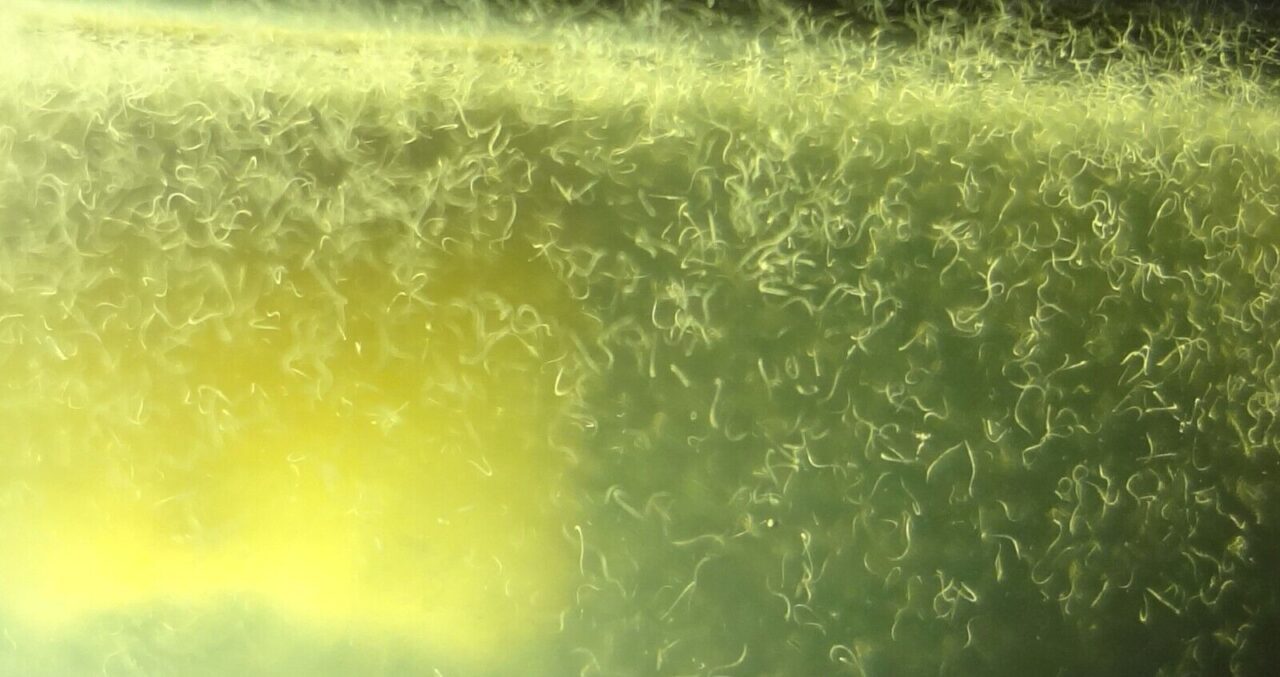
Ideal Uses for Vinegar Eels:
- Betta fry when newly hatched
- Corydoras fry when newly hatched
- Apistogramma fry at free swimming stage
- Killifish fry when newly hatched
- Gourami fry from newly hatched to 1/4 inch
- Fry too small for microworms or baby brine shrimp
- Harvesting vinegar eels
Why Choose Vinegar Eels?
Vinegar eels are an excellent choice for feeding small fry because they can survive in water for days, unlike many other live foods that die within hours. They are a great transitional food from greenwater and infusoria to baby brine shrimp and microworms. Their ability to stay suspended in the water column makes them more accessible to fry compared to microworms, which tend to sink and settle at the bottom.
Easy Culturing Instructions:
- Container: Use a one-gallon milk jug or vinegar jug, though smaller containers work too (with reduced production).
- Culture Medium:
- Place half an apple in the container.
- Fill the container 1/3 full with tap water (no need to dechlorinate).
- Add apple cider vinegar until the liquid reaches halfway up the container’s taper (about a 1:1 ratio with water).
- Wait Time: The culture will be ready in about a month, so plan ahead.
Harvesting Vinegar Eels:
- Simple Harvest Method:
- Use a small baster to transfer some eel-laden liquid into a funnel with a coffee filter.
- Let the liquid drain back into the culture, then rinse the eels in the filter with cold water.
- Swish the inverted filter in a cup or beaker of water to release the eels, then use an eyedropper to feed the fry.
Vinegar eels are easy to culture and an excellent food source for small fish fry and larvae. If you have any questions about vinegar eels, feel free to ask!